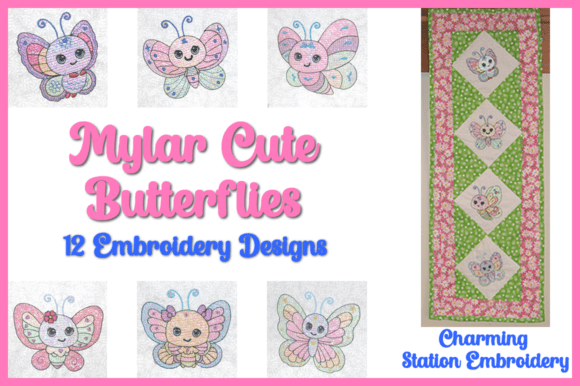
Review: Mylar Cute Butterflies for Sparkle
As a designer who has spent countless hours staring at digitizing software and even more time watching needles pierce fabric, I have developed a sharp eye for what works in the real world. We all know that metallic thread can be a nightmare to work with. It breaks, it shreds, and it often requires slowing down your machine to a crawl. That is why when I first loaded the Mylar Cute Butterflies set into my hoop, I was less interested in the digital preview and more focused on how these files would handle actual production.
This collection features twelve whimsical little butterfly designs, all specifically optimized for use with Mylar. The promise here is simple: you get the extra sparkle of metallic finishes without the fuss of using traditional metallic thread. For anyone running a craft business or creating personalized gifts, this distinction is vital. Time is money, and frustration is a productivity killer.
First Impressions and Visual Mood
The immediate vibe of this set is light, airy, and playful. These are not heavy, dense logos; they are delicate accents. The shapes are clean, avoiding overly complex curves that might cause registration issues when layering Mylar over fabric. When I looked at the layout, I noticed a thoughtful balance between open space and stitch coverage. This is crucial for Bugs-themed embroidery, where you want the creature to look lively rather than like a stiff patch.
For an Etsy seller or small shop owner, visual appeal drives clicks. These butterflies have a charm that translates well to printable mockups and digital product previews. They feel modern yet timeless, fitting seamlessly into nursery decor, spring collections, or whimsical boutique branding. The design assets provided seem versatile enough to appeal to a broad audience, from parents buying baby embroidery items to adults looking for unique sweatshirt embroidery.
Real-World Application: The Tote Bag Test
To truly evaluate a machine embroidery design, you have to stitch it. I decided to test one of the medium-sized butterflies on a canvas tote bag design. Canvas is a sturdy fabric, but it has a distinct texture that can sometimes swallow fine details. I paired the Mylar overlay with a satin stitch border in a contrasting thread color to ensure the shape remained defined.
The result was striking. The Mylar caught the light beautifully, giving the wings a shimmer that flat thread simply cannot achieve. Because the design is optimized for this material, the stitch density was appropriate—not so dense that it puckered the fabric, but sufficient to hold the Mylar securely in place. This is a key consideration for any commercial embroidery project. If the stitches are too sparse, the Mylar shifts; too dense, and the fabric distorts.
This success translated immediately to other potential products. I could easily see these working as embroidered patch elements on denim jackets or as subtle accents on aprons. For holiday embroidery, adding a touch of sparkle to a kitchen towel or pillow cover elevates the perceived value of the handmade product significantly. Customers often associate that extra shine with higher quality and effort, which builds trust in your brand.
Navigating Fabric and Hoop Constraints
While the designs performed well on canvas, I approached textured fabrics and stretchy materials with caution. When working with thin fabric or layered garments, such as a lightweight t-shirt, the weight of the Mylar combined with the stabilizer becomes a factor. I recommend using a cut-away stabilizer for stretchy fabrics to prevent distortion, especially since the sparkle element adds a bit of rigidity.
Hoop size is another critical variable. The description notes these come in 4x formats, which is a standard and versatile size. However, always confirm the exact dimensions before starting. If you are placing a design on a curved surface like a cap, ensure the design fits within the usable area of your cap frame. Small hoop sizes require precision; there is no room for error in placement. I also advise checking the design in black and white mockups first. This helps you verify that the stitch clarity holds up even without color contrast, ensuring the shape is recognizable on dark fabric or low-contrast backgrounds.
Commercial Viability and Brand Consistency
For digital product sellers and creative entrepreneurs, the licensing terms are paramount. Before selling finished items or digital embroidery files derived from these designs, you must confirm the license allows for commercial use. Assuming it does, these butterflies offer a strong return on investment. They are quick to stitch, which keeps production costs low, and the visual impact is high, allowing for better pricing power.
Using consistent design assets like this set helps build brand recognition. If your small shop product line features a cohesive aesthetic, customers begin to associate that style with your quality. These butterflies fit well into a broader narrative of whimsical, high-quality handmade goods. Whether you are creating custom apparel for a local boutique or personalized gifts for wedding parties, the professional finish of Mylar-enhanced embroidery stands out.
Practical Designer Notes
Before you commit to a large batch of production, follow these practical steps:
- Test on scrap fabric first: Never skip this step. Check how the Mylar adheres to your specific material.
- Check thread color contrast: Ensure your border stitches complement the Mylar and the base fabric.
- Review stitch density: Look for areas that might be too dense for delicate fabrics.
- Confirm hoop size: Make sure the design fits your available hoops, especially for smaller items like baby clothes.
- Inspect small details: Zoom in on the digitizing to ensure there are no unnecessary jumps or loose threads.
- Use proper stabilizer: Match the stabilizer to the fabric weight and stretch.
- Verify licensing: Always read the terms for commercial embroidery usage rights.
In conclusion, Mylar Cute Butterflies is a solid addition to any designer’s library. It solves the common pain point of working with metallic threads while delivering a premium look. For those who value efficiency and aesthetic appeal in their embroidery projects, this set offers a practical, beautiful solution. Just remember to respect the material limitations and test thoroughly, and you will find these designs becoming a staple in your finished product lineup.